Showing posts with label remodern movement. Show all posts

Saturday, June 28, 2008

Letters from Sweden - deliver and set

Its time to wrap up our series on pref-fab house building in Sweden. In previous entries we've looked at how the houses are put together, and the products and technology that have enabled the technique. Today we are going to look at the last part of the process: delivery and installation at the site.


As we've hinted at before the panelized method used by the Swedes requires less shipping than a modular technique. Where modular requires a separate truck/trailer for each module box with panelized a few trucks can usually deliver all the parts. All the wall and floor panels can be loaded on one truck, roof trusses and roofing materials on another. Its a denser method of transport compared to the hollow box of modular construction. Remember, Ikea ships their goods flat-packed because it avoids shipping air!


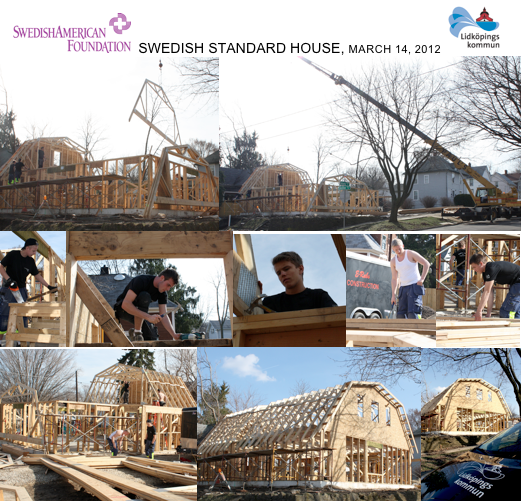
The parts arrive at the site and are craned into place, carpenter fastening the wall panels as they are off-loaded. This is important! They are not stacking them on site to be handled again when they are installed. The come off the truck and into their final resting place in one step. When the ground floor walls are up, then the drywall for the ceilings and wall patches is placed on the floor before the second floor framing goes on. The drywall is delivered with the rest of the panels from the factory, so there is no separate order of materials, and no unloading and carrying of drywall into the house. They leverage the crane for this. Here is a time lapse installation video made by Scott. As you will see the entire house goes up in one day.


Another common technique is the crane enabled delivery truck. This is a flat bed deliver truck which includes a relatively small crane for unloading the panels. We've seen similar equipment in the US. Often lumber yards will have a small lift arm on a flat bed truck for lifting drywall or lumber to a convenient spot on a construction site. Scale that up and you have the Swedish house delivery truck. Often the controls are wireless allowing the operator to get a better view of the load and place it with more ease. These trucks are commonly owned by the factory, which if you remember from earlier posts owns the entire process at the site. So unlike a lumber delivery truck in the US, the truck is not running to the next delivery. It can remain on site and assist with the remaining lifting work - this may mean spending a day at the site, vs unloading in an hour or two and disappearing. This can mean a lot to the speed of construction overall, and it is certainly convenient for delivery and assembly to be unified. Otherwise the builder must have his own equipment on site to handle the panels after delivery. That all adds extra steps which erodes the efficiency of the process.


While the house walls are going in on another part of the site the roof will be assembled. The trusses come off the truck and are placed onto a steel jig which has been previously set up to match the top plates of the walls. Roof sheathing goes on, pre-sided end panels go on, and the roof is shingled. This all happens just a few feet above the ground instead of an entire story up. This makes it easier for the workers to get on and off the roof, and carrying materials up is also much easier. From here the roof assembly is craned to the flat bed, carried over to the house, and craned in place.


It all happens very quickly, and everything that has gone before was designed to make this field install as fast and as systematic as possible. Remember this is not a curiosity there. This method has completely replaced the site based construction we do here in the US. This is the way the commercial house builders work in Sweden.


Now that the house is together what is left to do? The joints between panels must be finished and sealed on the outside, and drywalled on the inside. Ceiling drywall must be installed, and wires pulled through the conduits. Connections must be made for plumbing and electrical services, and the HVAC system connections as well. Windows and hardware must be adjusted, and the house made clean for the buyer. Buyers often add sweat equity to finish houses. Painting is common. Floor finishes sometimes as well. Plumbing fixtures as explained before are often installed like appliances after the fact.

One more entry to wrap up the series - we'll look at a range of Swedish house vendors.

Thanks to Scott for photos and video.
Previously:
Letters from Sweden - plumbing the prefab
Letters from Sweden - wiring zen
Letters from Sweden - a windows tale
Letters from Sweden - panel building in Sweden vs the USA
Letters from Sweden - Europe is different, Sweden is not, sort of..
Letters from Sweden - land of modern, land of prefab
Letters from Sweden - conversations with an expatriate builder


Technorati Tags: , ,

Continue reading "Letters from Sweden - deliver and set"

Tuesday, May 13, 2008

A coherent account of the Housing Boom/Bust

This is tangental to my blog, no doubt, but the state of the housing industry is relevant to our interest in the resurgence of modernism as a housing product. If you have money to build or are able to borrow in this credit climate, its actually a good time to build. And that's an opportunity for modernist to get a foot in the door, for developers flat out of luck its a market that still has demand. So read up, or listen up as the case may be, and learn what actually went down in the credit bust.

This radio program "This American Life" just did a review of the recent history of the ongoing credit crisis, and the housing crisis it spawned, and the overall stinky economy following on its heels. This is the best plain language, easily understandable account of what has transpired that I have heard to date. It was put together by a pair of reporters, one a financial correspondent for NPR, and the other a regular from This American Life. So it puts together accurate financial reporting with a human outlook and good story telling. If you think "yeah, I know there is a credit crisis but I don't really know what just happened" then this is a worthwhile listen. It puts it in very human terms as well - via the experience of a lot of people who participated in it.

I'd really love to blame somebody. Sure there was greed in there, but not nearly as much greed as sheer stupidity. You know, its like those C students I went to high school with, the ones that were not nearly as smart or responsible as me, but today make so much more money than I ever did or ever will. Its like these are the ones we leave our economy to. And they'll put it into a tree on a joy ride as readily as they did with their dad's Old's Cutlass back in high school.

http://www.thislife.org/Radio_Episode.aspx?episode=355

These podcasts are only available as a free download for a week, starting this past sunday. So get it now or pay later.

Technorati Tags: ,

Continue reading "A coherent account of the Housing Boom/Bust"

Sunday, May 04, 2008

Letters from Sweden - plumbing the prefab

In our last "Swedish Prefab" installment we looked at the innovations in electrical wiring and compared the round Swedish outlet boxes and plastic flexible conduit with loose conductors to the American system of square boxes and shielded wire cables (Romex). These Swedish products are not in the US ... yet.

Plumbing is another area where there is noteworthy innovation in Sweden. However this innovation has made it the USA and is something that is rather common: Cross Linked Poly Ethylene or "PEX" tubing.


click the link below to continue reading

A brief history: German chemist, Thomas Engel, invented the process for making this tubing in 1968, which he licenced to the Wirsbo Co. in Sweden. Wirsbo introduced PEX floor heating in Europe in 1972, and for potable water supply in 1973. The US market didn't see PEX until Wirsbo set up an office in Minnesota in '85 to market their technology. In Sweden today PEX is used in almost every job – and radiant floor heat is installed in 50% of the houses. While becoming more popular radiant head is not nearly as common in the US. Wirsbo is now part of the Upnor company, and numerous other manufacturers make and market PEX tubing systems. More info can be found:

http://www.uponor.com/about/about_6_1.html

http://www.theplumber.com/plumbinginventions.html

http://www.ppfahome.org/pex/faqpex.html


While numerous qualities account for PEX market share growth in the US and elsewere, our concern is how this new kind of plumbing facilitates off site construction.

One way to look at this is to consider how traditional systems make off site construction more difficult. Rigid pipes, such as soldered copper tube, must be cut to very exact lengths and turns made with soldered elbows that can be unforgiving during handling. If a pipe was hit during handling joints hidden behind finishes could easily be damaged. Field joints in the pipes would either have to be stubbed out of panels and fed through adjacent work without damaging them, or left cut off within the wall panel, and that wall panel left unfinished in order to make the plumbing connections. All of which makes the process more difficult.

With PEX, the flexible plastic piping can simply be left in a small coil where it exits the panel and easily passed through a hole in adjacent work to be connected later. It is a very rugged mateial, and it flexibility contributes to it ease of installation and durability during handling. Because of this it is possible to plumb and ship the walls with the plumbing in place, and to easily connect the the piping after the panels or modules are installed.


Although the US didn't see this technology until 15 years after it was invented, almost every plumber is familiar with the system, as are inspectors – and the uphill battle of changing standard practices in construction was undertaken by Wirsbo who saw the reward of gaining sales in the US market. The nature of product vs. system type of technology is interesting to note here - since pex tubing can and is often connected to standard copper fittings for the final connections in US plumbing fixtures.

The Swedes also have a distinct approach to plumbing fixtures. This might not at first seem like an area that has anything to do with prefab construction, but in reality, the rationalization of the pipes and fixtures all fit within the "off site" and "low labor" model of Swedish building systems.

In Sweden plumbing fixtures are treated more like appliances than built in work. For instance bathroom sinks are commonly surface mounted, with the supply and drain pipes serving them all exposed underneath. Bathtubs typically don't have the filler spout and valves mounted to them - they are on an adjacent wall. The tub usually is not connected to a drain pipe either - rather the tubs which are often on legs like an old fashioned claw foot tub simply dump out the bottom to a floor drain located under the tub. They have no hard connection to the house plumbing at all. Home owners shop new tubs te same way we might bring a frig or microwave into our new house.


So a bathroom in a Swedish prefab when its delivered is typically an empty room with the various plumbing connections ready to receive fixtures. This greatly reduces the complexity of the finished product. No cabinets to install, no tubs to set, no tile to fit over the plumbing fixtures, no shower pans with numerous angles and intersections. There are none of the fussy rough framing issues, built ins, and other work that usually make bathrooms the most expensive part of completing a house. There is nothing in this method that would prevent a bathroom from being finished out in a way that was more familiar to Americans. But what is key is that in Sweden it is customary for the builder to prepare the house to receive the bathroom fixtures which the homeowner can select in a "plug and play" fashion from the range of possible products.


When you look at the foundations for a Swedish house you see a slab with pipes located at the planned locations ready to connect using the flexible Swedish system – indeed the plumbing has been rationalized for prefabrication. As with the windows, wiring, and other systems we've looked at, everything is designed to work in concert with the prefab process.

With our slab ready to receive the walls, the next step is to deliver the house and connect all the parts on site.

Thanks to Scott for photos, links, and cross editing with me.
Previously:
Letters from Sweden - wiring zen
Letters from Sweden - a windows tale
Letters from Sweden - panel building in Sweden vs the USA
Letters from Sweden - Europe is different, Sweden is not, sort of..
Letters from Sweden - land of modern, land of prefab
Letters from Sweden - conversations with an expatriate builder


Technorati Tags: , ,

Continue reading "Letters from Sweden - plumbing the prefab"

Thursday, March 20, 2008

Letters from Sweden - wiring zen

Wiring is perhaps not one of the most exciting things to talk about if you are a house design junky. Getting power and lights to where you need them is unglamorous and underappreciated. But wiring is probably the biggest factor that determines whether a prefab house can arrive at the site finished on the inside, or empty - just a shell.


Why is that? The reason is that wiring is like the nervous system of your house. It runs in every wall, reaching out to switch locations, and lighting locations. It reaches every corner of the house without regard for whether or not those walls want to come out to the site in one piece or not. If a room can not come out to the site in one piece as it does in a modular house, then its likely it will come without the wiring. If walls come without wiring, then that means they are going to come without finishes because the wiring has to go in first.

click the link below to continue reading.


US style plastic junction boxes.

Here is the problem. In the US wiring connections must happen in a junction box, or j-box. Typically these connections are made in the boxes that lie behind switches and outlets or light fixtures. The reason is because anyplace you have a j-box you must have a cover to access that box - it can not be buried in a wall behind the wall board. And so it makes sense to make those connections at the devices which already come through to the surface, like switches and outlets. Ok - everybody is straight on that? Lets rewind to the prefab house factory. We want to build separate wall panels finished inside and outside like our friends in Sweden. But this means we have wiring in each wall section that must be connected when the walls go in place. But our connections have to happen at outlets boxes which are floating in the middle of the walls? What do we do? Introduce j-boxes with covers at the corner of each room? No. How about we leave a length of wire hanging out and fish the wire to the box? That would work in theory, but in practice it means having an electrician there when the wall panels are set, and leaving the wall panels dangling from the crane while the electrical work happens, and pulling that last bit of wire through in sync with the panel landing so the slack is not in the way. Forget it.

The real problem is not the boxes, its the wire. There are two components to a wire - the conductors, and the shielding for the conductors which prevents them from being damaged by nails and picture hangers. In the US commercial construction the shielding is usually metal conduit, either flexible or rigid. The conduit is typically laid and later the conductors are pulled through it. Connections can be made between conduit anywhere with proper fittings, and the conduit terminates at a box. Great - so we can join the conduit where the panels meet and pull the wires later, right? Not quite. The metal conduits are much more expensive and not used in residential construction. What you find in houses here is plastic shielded wire which is great stuff and inexpensive, but it bonds together the conductors and the shielding which means the two functions must go in at the same time and never a break between boxes.


Top: US style plastic shielded cable, bottom: US steel flexible conduit.

So, what we need is a decent inexpensive conduit system for residential prefab construction. Just like the Swedes have. Yes, of course that is the punch line, and once again the sick joke is on the US prefab industry. Our wiring fouls our progress every step of the way. The Swedes have redesigned their electrical components to make prefab easier. Lets look at their system briefly.

They use a flexible plastic conduit system, much lighter than our flexible metal, and equal or stronger than our plastic shielded wire. The ends snap onto the fittings on their plastic j-boxes making connections rapid and precise. They also have fittings that let you join lengths of conduit between boxes as you would where two prefabbed wall panels come together. I wish there was more to say but its that simple.


Swedish junction boxes and plastic flexible conduit.

After the house is set the conductors are pulled in the field using pull cords and fish wires. There is no way to avoid that field work until someday there are code approved connectors that do not require junction boxes. Such a product would allow panels to be plugged into one another when they are set speeding prefab construction.

There are also some useful accessories in the Swedish electrical parts that any builder would appreciate. In the US after the electrical rough-in is complete the drywallers come through and cover everything up. Somebody has to go around and find all the outlet and switch boxes again and cut them open. The Swedes have temporary covers that fit over their junction boxes. These covers have a magnet in them that makes finding them again easy. The magnet is centered, so this used to center a hole cutter that fits a power drill. It quickly cuts the wall board to just the right size. The temporary cover is removed to be reused again, and the box is ready for wire to be pulled. This really reduces a thankless job to an easy task.

Our correspondent from Sweden, Scott Hedges says:
... overall I think the point is that this is an affordable way to install the wiring paths for subsequent field assembly and in-field conductor installation. It reflects an innovation as significant as PEX tubing (that is the plastic tubing used for plumbing, Greg) in terms of speed of installation, and flexibility of assembly.


A Swedish junction box installed. You can see the plastic conduit very clearly here.

So that is the story of wiring and prefab in Sweden. We'll look at plumbing next. And we are getting closer to the end - thanks for following this story and all your comments. And all our thanks to Scott Hedges for the info and images of Swedish construction.

Previously:
Letters from Sweden - a windows tale
Letters from Sweden - panel building in Sweden vs the USA
Letters from Sweden - Europe is different, Sweden is not, sort of..
Letters from Sweden - land of modern, land of prefab
Letters from Sweden - conversations with an expatriate builder


Technorati Tags: , ,

Continue reading "Letters from Sweden - wiring zen"

Sunday, February 24, 2008

Letters from Sweden - a window's tale

In our last installment of the Letters from Sweden we looked at the panelization technique used by the Swedes and some of the administrative barriers to its adoption here. Today we'll pick up where we left off and consider some of the products that go into the Swedish panels and how they support the panel building technique. We'll look at windows, how Swedish window units are different than US window units, and how this plays out in the construction.


click the link below to continue reading.

In Sweden the windows are installed into the wall panels on the flat (inside up) after they are framed. The windows are designed to fit flush with the panel's outside so when they go in the window face is flat on the table flush with the framing. They install the window units with adjustable fasteners which allow the windows to be squared after the panel is installed and is stable. Think of the adjustable european hinges in your kitchen cabinets. If you've built something bought at Ikea you've handled these. You know how they allow you to adjust the door panel to sit square with the cabinet frame. The Swedish windows are mounted with hardware that allows the same adjustability to the window unit. Lifting the panels into place is likely to cause some sort of movement in the panel, and this adjustment allows them to be made square after installation. When the wall panels are flipped over to install the siding the windows are trimmed and a metal sill extension added.


Here you see the Swedish window after the panel is flipped, before siding is installed, the metal sill in place. In the second image the siding and trim has been installed lapping over the window unit.

In contrast our windows in the US don't included adjustability like this. In the field our windows are fastened into the rough window openings from the outside using something known in the industry as a "nail-flange". The windows project from the wall surface and are self trimming providing a standing edge fore siding or trim to terminate against. The siding and exterior trim are installed over this flange locking the window into the construction. If the house ever settles or moves the wall will take the widow with it racking the frame, likely making the window stick or jamb. Not as likely to happen with on site construction, but a distinct possibility with handling large wall sections.


Here you can see a typical US style window, Andersen. The nail fin clearly seen at the edge of the frame, fits against the sheathing. The rest of the frame extends out creating an edge for the siding to terminate into.


Here a typical US style window installation, Eagle. You can see the siding material is butted directly against the side of the frame.

So can we build using the Swedish panel technique with our US style windows? That is a good question. Perhaps. It would require a change in sequence. Our windows would have to go in as the first step on the outside work on the panel. But the more the panel is handled the more likely the window is to be out of adjustment when the panel is finally installed. If the window was damaged in handling it would require a good deal of the panel to be disassembled in order to replace a window unit because of the siding attached over the nail flange. The Swedish windows could be swapped from the inside leaving the siding and trim in place. So yes, it can be done, but the US windows obviously have a lower tolerance for error so to speak. The Swedish windows anticipate these issues and accommodate them.

Thanks to Scott Hedges for the Swedish factory photos. Next we will look at wiring.

Previously:
Letters from Sweden - panel building in Sweden vs the USA
Letters from Sweden - Europe is different, Sweden is not, sort of..
Letters from Sweden - land of modern, land of prefab
Letters from Sweden - conversations with an expatriate builder


Technorati Tags: , , ,

Continue reading "Letters from Sweden - a window's tale"

Thursday, February 07, 2008

Letters from Sweden - panel building in Sweden vs the USA

Ok, we've been beating around the bush, setting the stage, trying to understand the context in which this Swedish building method exists. If you've been following the series you get it, its dark, its cold, there is no building season for the better part of the year. They need a factory based system to have an industry there, and so they do. Lets look at it.

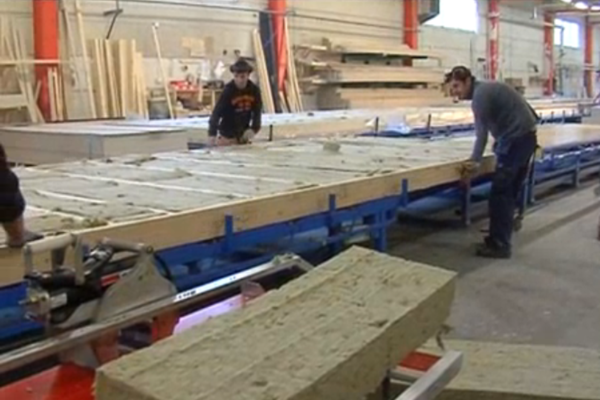
You've picked up by now that the Swedes are panelizing their houses. The walls are being assembled to the greatest extent possible in the factory. Windows and doors are installed, exterior siding, interior drywall. This means everything else within the wall is in there too - insulation, wiring, and plumbing where it exists. The studs are precut to the common height, and walls are laid out on great tables with the carpenters working at convenient work height. Sheathing, air barrier, and siding is applied and the panels flipped to gain access to the work that proceeds from the inside. Wiring conduit, plumbing, insulation and vapor barrier are all installed before wall board is applied. Some of the drywall is left off in strategic places to facilitate the installation of the panels on site, and this must be installed in the field. There is not genius in this, but never the less its near impossible in the US. Lets look at why.


First off we have issues with construction inspection conventions in the US. Construction must be inspected before it is insulated, closed in, and the underlying work is obscured. Framing, plumbing, and electrical work are all inspected at this point. The modular industry has established a practice of third party certification to work around this, but this method would require a different routine as the proportion of site and factory work is not the same. Modular is more or less done with the set of the modules. Panelization requires the field inspector to pickup more of the inspection work again in the field, and I predict the blurring of lines of responsibility to elicit resistance. This is essentially an administrative obstacle, but real enough. This obstacle does not exist in Sweden.

Second are issues of products and standard construction practices. In Sweden products are designed to facilitate this panelization. In the US they are designed to be installed in the field. This purposeful design of construction products allows the Swedes to optimize their process. They are not fighting with the construction to break it into panels, like we would here. Next we'll look at some of these products in more detail.

Previously:
Letters from Sweden - Europe is different, Sweden is not, sort of..
Letters from Sweden - land of modern, land of prefab
Letters from Sweden - conversations with an expatriate builder

Technorati Tags: , , ,

Continue reading "Letters from Sweden - panel building in Sweden vs the USA"

Sunday, January 06, 2008

Letters from Sweden - Europe is different, Sweden is not, sort of..

Sorry for the delay in this series. I've been trying to figure out the best way to present these observations. Its time to look at the process in detail, but too much to cover in one entry, so how to break it up. I've decided that first we'll look at what goes on in the factory, and then on the site, and contrast both to prefab and site building practices in the US. But before we look at the studs and nail guns we have to consider their business model, and how it is different.

My correspondent from Sweden, Scott Hedges explained to me early on that there was more similar about the USA and Sweden than there was different. Sweden is bias towards suburban development, much as we do in the US. This is in contrast to other parts of Europe which tend towards more urban and village density for new development. Sweden like the US has the open space needed to develop housing in a suburban pattern, and like the US there is a relatively abundant timber resource for building houses of wood. So Sweden is like the US - they build suburban houses, in suburban neighborhoods. Yet the way they build the houses, the design of the houses they build are so different.

Click through below to read the rest of this story.

The first and most primary difference about the way these houses are built is that in Sweden, for the most part, these factories that prefabricate the houses own the whole process. They own the site, do the site work, market and sell the houses, fabricate, transport, install, button up, and hand the keys to the owner. Not so different than here. The biggest home sellers in the US, names like Toll, Pulte, Ryland, Beazer, they also own the whole process, but they largely use site built construction for their homes. Prefabricators here in the US do not. If we look at modular, the most popular prefab technique, they primarily serve small builders and developers, handing off the modules at the site, they walk away with their check before the boxes are set.

In our correspondence we tossed about why this might be. In the end there is no clear answer why the large builders in the US have not taken steps to streamline their construction process - make it more profitable. Isn't this "job one" with big corporations? I believe the reason why our modular factories have not extended to own the entire process is more obvious. Modular grew out of the mobile home/park trailer industry. What they built was not real estate - they were sold by a dealer network much like cars. When shoddiness became a problem the Fed stepped in and created a nationwide code for these trailer homes - the HUD code. Now the industry split. Some factories continued to build trailers under the HUD code. Others jumped to building modular homes under the local building codes. But the business model did not change. They still sold the homes to a third party, who installed them and sold them. The factory delivered and walked away. This is because once the house is on the foundation it becomes real estate, and if for some reason they were not paid the effort to get their money or repossess becomes much more complicated at that point. So the modular industry is not about the most efficient way to build a house - its about putting the most value into the box before its on site. The more complete the box, the more profitable the box, so even if the entire process would be better with some of the work done in the field, say boxes knocked down, it does not happen that way because the factory's incentive is to have that work be their own.

The Swedish factory on the other hand has incentive to adopt what ever process stands to make them more efficient and increase their profit. Why not the big builders in the US though? Its a long term outlook. It takes investment in infrastructure and the risk of trying new techniques. But in the long term you find better methods and profit from them. Are the US home builders more focused on short term profit (duh!). Is this a difference between corporate priorities and privately held companies?

Maybe Scott will give us some links to the Swedish equivalents of the largest US builders?

Previously:
Letters from Sweden - conversations with an expatriate builder
Letters from Sweden - land of modern, land of prefab

Technorati Tags: , ,

Continue reading "Letters from Sweden - Europe is different, Sweden is not, sort of.."

Friday, December 28, 2007

Building the Modern House - an owners tale by Dan Akst

Daniel Akst is an author and journalist who has written several articles covering the recent prefab and Re-Modern movement. His articles have appeared in the Wall Street Journal, New York Times and he's even written about modern homes for This Old House. Most significantly he has built his own modern house and written extensively about it. These are a worthwhile read for anybody building their own modern home.

Dan first offered up his story in a three part article that appeared in Money Magazine. You can read the text of these articles on his own web site here:

Part 1
Part 2
Part 3

He also wrote a shorter account with more of a design emphasis for Metropolis Magazine that you can read at the on their web site: link. Its interesting that at the end of this article Dan calls for the production of decent house plans for modern homes:

...If they did, they might want to use a stock plan; but here is another reason why more interesting houses don't get built, even by individuals who care about good design. Most of the house plans sold through books and on the Internet are awful; a few decent ones are available (including some in the Life magazine's "Dream House" series) but virtually none are Modern, unless what you really want is a chunky-looking "contemporary" with diagonal wood siding. The absence of good Modern stock plans means that people who want this kind of house have to hire an architect, at fees ranging from a few thousand dollars to perhaps 15 percent of the construction cost.

Although Modern architecture remains suffused with the rhetoric of idealism, even relatively prosperous families who are thinking of sponsoring it will beg off unless the entire clanking apparatus of home-ownership--all of it geared to the lowest common denominator of design--can be brought around to accommodate something more interesting. Modular housing might be one answer. Another would be the publication of some first-class stock plans that specify standard materials to achieve quietly fabulous results.


Incredibly this is just what we have set out to do, and our customers have in fact done. Dan's article was in the November 2002 issue of Metropolis. Our plan site went live on November 4th, 2002.

He's also a good novelist - I've read a couple of his books and enjoyed them. More info about the rest of his work on his web site Akst.com.

Technorati Tags: ,

Continue reading "Building the Modern House - an owners tale by Dan Akst"

Sunday, December 16, 2007

Project Outrage

Project Outrage is an effort of The Slow Home site to gather the collective voices that are dissatisfied with the status quo in housing. Collecting testimonials of the experience of individuals in the form of a blog Project Outrage creates a record of evidence which is usually lacking when it comes time to demonstrate to developers and other key housing players that there is a market for other solutions.

Please check out Project Outrage at their site and tell your story. Sign their Declaration:

We demand an end to poor construction, bad design, misleading marketing and environmental neglect in the housing industry. Neighborhoods and homes should be built for people not excessive profits. They should be healthy, vibrant, and not require long commutes. They should uplift the spirit and gracefully fit our needs. We believe that everyone has an obligation to create thoughtful, responsible, and sustainable places to live that leave a positive legacy for future generations.

If writing is not your thing and you have a photo of a development or mcmansion that you hate, then post it to their Flickr Group.

If you are a facebook user Project Outrage has a presence on Facebook as well.


Previously on LamiDesign blog: The Slow Home Project

Technorati Tags: ,

Continue reading "Project Outrage"

Wednesday, December 12, 2007

Letters from Sweden - land of modern, land of prefab

In my previous entry I introduced Scott, my correspondent from Sweden. An American builder relocated to a suburb of Stockholm, he landed in an alternate reality where modern housing was everywhere, commonplace, even dare I say unremarkable. None of the stigmas or resistance we have come to associate with building a modern house were present. Every builder offered solid modern design in the range of homes they sold, and were more than happy to sell you one. On top of this prefabrication techniques were the norm. Sizable portions of the houses Scott saw being built were put together in the factory, and the standards for wiring and plumbing seemed to be designed to make this easier, not more difficult as it is here in the US. Scott made it his personal mission to learn more about how they were building houses with the hope he could distill what it was in Sweden that enabled this and was apparently missing stateside.


Click through below to continue reading..

Scott began by telling me about the typical process by which houses in Sweden are built:

"...the majority of new construction is built like this. I would call the house panelized - but it is "way way panelized" and is a total package. The houses come on trucks from rural places in Sweden. The windows are in, the insulation, wiring, wallboard where possible - every thing - the pipes, the wiring systems, the doors, stairs ... everything has been engineered and rationalized to reduce labor, find energy and material economy and work with the method of construction where stuff is pre-assembled as much as possible inside a building and then "erected" or installed on the site under very compressed schedules. These houses go from slab to dry in and locked inside of a week - the fit out and installation of everything else is really much like what I've seen in the USA - you just can't squeeze that much more out of what happens on a building site ... other than make it a total package and schedule the deliveries in the most rational way. For instance you have to install the interior ceilings after the house is up - however you can load the sheetrock in the room as the sub floors go down (and they do) which cuts down own lugging stuff around."

Lets contrast this with the US. There are some companies doing panelization, but typically it is only carried as far as the rough framing. Wall panels come to the site with studs framed and sheathing on. Its a short cut on rough framing, but the siding, insulation, utilities, and interior finishes still need to be added. The LV House is a good example of this. More recently the prototype Loblolly House has won awards for its integration of building systems into the panelization. But lo and behold - this is standard practice in Sweden. Wall panels come to the site with siding on the outside, wall board on the inside, and wiring and plumbing in place within the walls. Why can't we do that? One of the issues are our standard practices for electrical and plumbing work. They do not lend themselves to these field connections between adjacent panels, where as the Swedish standards are designed to ease these very conditions.

>

But the majority of prefab in the USA is in the form of modular construction. Modular construction reduces the field connections to a a few major utility connections when the boxes are placed on the foundation, but otherwise are much more complete when they arrive at the site. Granted, this is not the reason why modular is more popular in the US. Modular housing here grew out of motor-home construction, which was a more permanent version of a trailer. When the flimsy construction of motor-homes became an obvious problem in the US it was put under a nation wide spec known as a HUD Code. At that point the industry split into factories that continued to build motor homes under the new rules, and factories that adapted to building to local site built construction codes which became the modular industry. That has dominated the US prefab business ever since. Its popularity here is due to administration - not because it makes construction sense. And how could it make construction sense? Shipping a house in big pieces is tantamount to shipping air. There is a reason why Ikea ships furniture in a flat-pack. The shipping is so much more efficient for flat goods, than big boxy hollow goods. The challenge becomes how to complete as much of the house as possible while still being able to ship it flat. Whole houses arrive on two trucks rather than 4 or 5.

Next we'll get into more detail about how these houses go together.

Previously:
Letters from Sweden - conversations with an expatriate builder


Technorati Tags: , ,

Continue reading "Letters from Sweden - land of modern, land of prefab"

Monday, December 03, 2007

Letters from Sweden - conversations with an expatriate builder

A few months ago I got an email from a fellow by the name of Scott Hedges. He was a builder/carpenter/cabinetmaker as it turned out, and a fan of modern, a Dwell reader from nearly the start. He was from Michigan, but he was not in Michigan, at least not for the time being. A career move had taken his family to Sweden where he was being a keen observer of the building trades in the region around his home. He wrote me on this one day, towards the end of September because I imagine he could not contain it anymore - he had to tell someone, someone who would even care! I suppose he thought that guy, the one with the house plans, at least he would get it - and so I in turn have to share it with you, my readers, because like Scott I know that at least you would be somebody that would care, that would get it. What Scott found as he settled in to his new life in Sweden that the thing we modernists in the USA were struggling to find, swimming upstream, fighting to realize, a decent affordable well designed modern home, was flowing like milk and honey in Sweden. This opened up a correspondence between Scott, myself, and economist Jeffery Rous from University of North Texas and my design partner on the IBU competition entry. Over the course of the following weeks we poured over copious photos and web sites that Scott had accumulated and tried to come to terms with why what we struggle with so desperately here in the states comes with such ease and grace in Sweden. These are the Letters from Sweden and over the next few weeks I'm going to try to share with you the most significant parts of our correspondence as we all came away convinced that there was much to learn from the practices Scott observed.


images from the Gotenehus (Yeah-ten-eh-hoose) website

Here is what Scott said in his first introductory email to me:

The reason that I'm writing though is that my family and I've moved to Sweden and have been very impressed by the state of modern and the rather unremarkable way it lives here. What I've seen in Sweden about home building and home buying strikes me as very different than what I'm aware of in the USA... Simply put the market place here is full of modern homes, and every larger house company offers them ...

I guess part of my surprise stems from years reading in Dwell about "wow wouldn't it be nice if" ... and the stories of super talented creative people .. who are trying to put a product out there and risking your lives doing it ... and then I show up here and the locals want to know what is the big deal? ... "ho hum" which of these 100's of kinds of modern houses would you like delivered in a month, sign here".


What would we all give to have hundreds of models of modern prefab houses available from vendors today? Why there? Why not here?

Stay tuned! This series will continue.

Technorati Tags: , ,

Continue reading "Letters from Sweden - conversations with an expatriate builder"

Monday, November 19, 2007

Neutra's iconic Kaufmann House for auction - what's it to you?

A landmark historic modern home, meticulously restored, now to be sold by auction no less. It is said that pricing of the house will reflect its value as a design object in the context of its significant history and cultural value - meaning it won't be priced as real estate, calculated from its square footage and bathroom count, no more than you would price a famous painting on the quantity of canvas and gesso. "So What" you say? What's it to me, an average jane or joe who would just like an outside the average affordable modern house. I say it means a whole lot more than you think.


the Kaufmann House designed by Richard Neutra, 1946, photo by Tim Street-Porter for the New York Times

I'm not going to repeat the whole history of the house - its been told many times and way better than I can repeat. Start with the New York Times article on the sale, and the associated photo slide show. Its an awesome house, commissioned by Edward Kaufmann who was Frank Lloyd Wright's client for Falling Water, a fantastic award winning restoration by the current owners with architects Marmol Radziner which included the consolidation of surrounding parcels to protect the house from encroachment.

This house has everything going for it as a piece of real estate. It seems unthinkable that it could be the victim of a tear-down. Don't be surprised - it has happened to other fine examples of design
more recently than I care to remember. But the marketplace is not looking upon this house as real estate - its looking upon it as an object of cultural value, which derives from its design. In short THE DESIGN HAS VALUE.

That is a head change for the market, and I know that this is at the elite strata of real estate, but the writing is on the wall. Design is destined to play a bigger part in the valuation of properties. The fall out from that is consumers becoming more savvy about design and demanding better product, just as we have seen in the majority of other consumer products. Less McMansions and poorly designed cookie cutter houses, and more quality designed homes which will include the world of modern homes that we are interested in here. It is inevitable that as more consumers learn about design many more will be drawn to modern design. I am not talking about the displacement of traditional houses. They may always be the main-stay of the market. But the crummy hokey poorly designed pseudo traditional crap that america has come to blindly accept as their image of home is going to increasingly come under pressure from better designed product. Savvy developers and builders will be ahead of the ball - start now during this opportunistic downturn.


Technorati Tags: ,

Continue reading "Neutra's iconic Kaufmann House for auction - what's it to you?"

Thursday, November 15, 2007

An inspiring photo blog

I got an email last week from a reader and LiveModern member who built his own house taking inspiration from the info he gathered online. I thought man - that's what its all about. A lot of effort no doubt, but he was inspired to build himself the kind of house that he envisioned his family living their life in.

Now not everybody is going to have the time, where-with-all, and nerve to build out the bulk of their house themselves, or even design it. Well, that's why there are house plans. There are people whose skills, time, budget only allow a certain amount of DIY, and that's fine. What we need are the tools, whether it be info online or affordable house designs, that allow people to successfully complete a project. And the more that is done, the more likely it is that builders and developers are going to sit up and notice that there is a burgeoning market right under their noses.

His note:

Hi Greg,

Actually we have never met and I've never emailed you before.
Nonetheless I have been all through the lamidesign webpage and have
read many of your posts on livemodern. The information I gathered was
both very helpful and inspirational as I designed and helped build our
small house in Logan, Utah.

Some shots of the house are at
http://picasaweb.google.com/mikew.usu/LoganHouse

Thanks for all you do out there!


Check out his link and see his great house! Post about it here - he will be reading!


Technorati Tags: ,

Continue reading "An inspiring photo blog"

Wednesday, November 07, 2007

Re-Modern Movemenet - Dwell ascends?

I received an email today from Dwell's Publisher Michela O'Connor - oh, don't worry - I'm not a personal correspondent with her - it was a mass email. The gist is that Dwell was commenting on the passage of Conde Nast's long lived home magazine House & Garden.. That's right - after 106 years they are shuttering the magazine. It was announced yesterday completely unbeknownst to me as I'm slammed with deadlines this week, and I guess I was surprised that this was how I was finding out about it.

Did you get this email today? I'll post the text below if you did not. I'm not sure how to take it? Is it simply the desire to mark a milestone? Is it as significant as they would make it to be - is this a real shift in the zeitgeist? Or just savvy marketing to make an issue of it? And perhaps a drop of gloat in there too? House & Garden had long been the 800 pound gorilla in home magazines, except maybe for Architectural Digest who was more decorator extreme, not mainstream as H&G. Are they claiming Dwell is taking its place in popular culture? I'd be thrilled to think that modern had ascended, but I also don't want to kid myself - loose the "eye of the tiger", the "want" to win - being second and trying harder, et all...

What do you all think? Please, comment.


106 years is a long time to maintain relevancy and few have done it.

As you already know, Conde Nast has announced that effective with the December issue, House & Garden will cease publication. Despite Conde’s very clear statement that it no longer made business sense for them to continue, much is being written in print and online about why this occurred.

I thought it important to write to you about this event because I believe it signals a change in the shelter category; not good or bad just a shift that has been brewing for a few years. And, I don’t think the housing market is the culprit. While a downturn in housing is nothing to brush aside, it is not as fundamental to the change in the shelter category as the changing mindset of the consumer.

Ten years ago, Dwell’s owner and founder, Lara Hedberg Deam, went through a very typical home renovation process. The only thing atypical was her desire to have her ideas expressed in a way that only modern design can. During this process she noted a lack of relevant information in existing magazines, which urged her to explore the concept of a magazine and media platform to fill the void. She felt that if modern design was to be covered in media it should have a certain rigor as well as an accessibility of thoughts and ideas. It was this experience that led to the founding of Dwell. Simply, she wanted to bring modern design to everyone and illustrate the design philosophy that she found so vital in her own endeavor. Seven years later we have successfully grown the Dwell brand on five platforms - Dwell Magazine, Dwell.com, Dwell on Design, Dwell Homes by Empyrean, Dwell TV- centered on our founding premise.

Design has become a household word thanks to a host of influences, all of which have spurred discussion about the influence of design in every industry. Because of this movement, design professionals and their modern savvy consumer counterparts are engaged in a quest for good design; looking for ideas, inspiration, and great companies to deliver both. Dwell champions their mission, chronicles their journey, and leads them to every corner of the globe where good design can be found.

Losing a worthy member of the home and design category should be a reminder that the meaning of house and home has changed in a demonstrable way. Being At Home in the Modern World is what it is all about.

Warm Regards,
Michela O’Connor Abrams
President & Publisher

Technorati Tags: ,

Continue reading "Re-Modern Movemenet - Dwell ascends?"

Sunday, October 21, 2007

IBU Houses - Safe Green Blocks LLC, the wizard behind the curtain

This post is for you if you are as big an IBU geek as me. I've been meaning for a while to write up some background on the people helping in my effort to develop IBU housing: Safe Green Blocks, or SG Blocks is a new venture formed by a group of people who have been behind several prominent efforts at preparing shipping containers for building.


Long time readers of the FabPreFab messageboards may recognize the name of David Cross. David has a background in the merchant marine and came to the realization long ago that shipping containers made a compelling basis for a construction system, long before it became a focus of attention as an interesting off-shoot of the recent prefab movement. David is perhaps best known for a series of prototype house projects that he ushered through various permitting and funding hurdles, with one of those projects in Tampa receiving widespread publicity as the focus of several segments of Bob Villa's tv series. However his first prototype was built in North Charleston, South Carolina, and shocked the readership of the FabPreFab messageboard when it was posted - up till then the whole idea of building houses with these things seemed like just a theory.


When David began these efforts they were an offshoot of the work he was doing in container modification for the Tampa Armature Works, or TAW. A large vendor in remote site power generation, and associated shelters David's container expertise was being put to work for them in their main business. At the same time they were supportive of his pursuit of housing and building with the containers as a way to expand this part of their business. Eventually however they parted ways as David set out to concentrate on this 100%. Joining him were business partners that had previously provided engineering and logistics expertise in the container mods that he had done before - SG Blocks was born.

One of these partners is Steve Armstrong, a structural engineer who has over the years provided David with consultation on container mods, and was in from day one on David's efforts to create housing. While David was on his journey Steve was on his own. During this span of time Steve went to work for a large senior housing developer, Stratford, and while he was there he continued to consult to David. Enter Bruce Russell and Paul Gavin who were with Stratord and watching the work that David and Steve were doing. This group formed the foundation of SG Blocks which was completed with a relationship with ConGlobal, an nationwide container handler who provides the raw material at sites all across the country. These multiple depot sites double as fabrication sites allowing them to cover the entire country, and reduce shipping distances.


So in one way or another the partners of this group have had a hand in many of the container projects you have seen on the internet, and they have been providing technical back up for me as I've worked up my the design of my proposed system. They have the technical know how to see projects through to completion including the backup that may be required for a rigorous permitting environment.


Here is a link to their site:
http://www.sgblocks.com/

And here is a link to an article about their business: SG Blocks in Charlseton Business. A good read if your interested in this.

Now, lets build some IBU houses people!

Technorati Tags: , , ,

Continue reading "IBU Houses - Safe Green Blocks LLC, the wizard behind the curtain"

Friday, August 31, 2007

Our remodern movement - the tipping point?

Is this it? Is this our time? Is it time for the modern house to break into the mainstream of American housing?

The whole internet is slow on a Friday night so its a good time to ruminate. I often reflect on the state of our remodern movement as I've come to call it. Is this the time? Will modern houses break into the mainstream, finally? Will this be the time when everything changes, and anybody who wants to buy a house, build a house, will have modern as one of their legitimate choices? A builder, or real estate agent - heck, your friends and family even - won't think you strange for wanting a house that is not (pseudo)traditional. I want that change, I'm working for that change, I know many others who want that change, and many others working for that change. And I see change, lots of it of late, new modern houses being built and shown on the internet, new modern developments being offered, modern prefab houses conceived, offered, sold, and built. A lot has changed, a lot has happened since I became convinced to pursue change, oh, around about 2001. And why? What is it that I want from this? What is it that you want? I simply want it to be easier to get the kind of house I like.

Yet, it certainly has not happened yet - "it" being the sea change that would bring modern houses into the mainstream of choice. As far as things have come forward in the past few years its clear that there is still a long way to go. Prefabrication had a run up of popularity, at least as an idea. Articles expounding on the new generation of prefabs, notably modern, appeared in different print publications across the country, and online as well. Several of these products have taken hold and are producing houses in numbers the likes of which have not been seen since the 1950s. Some of these products have certainly been more successful than any past run at prefabrication by an architect with a revolutionary plan. But yet we are not there yet. Modern is not being served up for breakfast along side your corn flakes just yet.

Other conditions have changed as well. The housing market is reeling from the biggest run-up of values and demand most of us have ever seen in our life times. The talk of bubbles bursting has certainly come true, and we are already witnessing the fall out on associated industries as lenders shrink their work forces, some hammered by defaults. There must certainly be a softening of construction costs along with this burst market. Many builders and subcontractors who were gainfully employed by large corporate developers are now on the street competing for other work. Developers have greatly reduced or stopped building the status quo houses which are the mainstay of their business. Yet, the just emerging voice of the un-served demand for modern housing is still growing, still looking for product, still largely unserved.

Does an opportunity lie here? Could some forward thinking developer decide to serve this market, and enjoy some growth in contrast to the retreat of the housing market in general? Could many individuals who were seeking to build their own modern house now suddenly find themselves finally able to build aided by the softening of prices - is this the break that they have been waiting for? Could other developers take note of the growth in this segment while the rest of the market retreats, and then too attempt to serve it? Might this growth expose many others to the modern house, people who never considered it before, adding more to the numbers of unserved demand? Can we tip the circumstances in our favor in this context and get the modern house's foot in the proverbial door of the market?

I ponder this. Will it never happen, or is this the time. I finally got around to reading The Tipping Point by Malcom Gladwell, an interesting book on the phenomenon of social epidemics. Its about the point when an idea catches on and spreads like wildfire. When things change suddenly for no obvious reason, when the rate of change is suddenly exponential. Epidemics of disease behave similarly, and hence much of the terminology is interchangeable. In writing about it he has said it was his hope to give people the tools to start their own positive epidemics. Its certainly not a how to manual, but it is a competent attempt to form his observations of common patterns into a framework, if not a formula. Could we bring that to bear on this situation? If the context of the market right now is favorable to an expansion of modern housing, then what else can we do to hasten its adoption, or simply awareness?

I can't repeat the entire book here, nor am I advising everyone to go out and read it. But at least have a read through some of the authors comments at his web site, and a look at the outline from wikipedia. In brief, he advances that small things can bring about big change. He observes people who assume different roles in this process - Connectors, Mavens, Salesmen - I won't explain them as a breif read of the wiki site is a good start. Are you one of these? Could you be? He observes a few concepts that are common - It only takes a few of the people with these skills to tip something, ideas must "stick", be meaningful to people in order to tip, context strongly influences our behavior (and sometimes small changes in context beget large changes in behavior), group size is important for the coherence of ideas, the epidemic cycle follows the bell curve (our current readers no doubt at the lead of the curve).

As I read this book my mind keeps returning to our re-modern movement. We have people acting these roles, we have a sticky idea which many people are very passionate about, we have a context that has shifted to favor our goals. What can we do to hasten the tipping?

Be a Connector. Let the people in your life know about your preference for a modern home. No, you don't have to go around like some freaky cult member. Just wear your preference on your sleeve. Post a photo of that to-die-for modern home from Dwell, or Atomic Ranch on your office wall. Get a coffee mug with a modern house on it. Carry your Modernism magazine around with you. Write about your preference in your blog and link to your favorite modern houses online. Be ready to lay bare your enthusiasm when a curious co-worker or friend asks you about it.

Be a Maven. Do you dig into the very last detail of things you are into. Do you have the earth friendly HVAC system of your dream home planned out in your head, and you know where to get the best price on the parts? Be a materialicous, or a Future House Now. These are people just like you that put their obsession to work for all of us. Even if you think it may be an obscure dimension of what the whole picture is about I can assure you that your blog about everything to do with your modern kitchen sink will have hundreds of passionate followers.

Be a Salesman. Are you a leader in what you do? Do people follow your lead because of your work, or your social circle, or your volunteer activities? Bring some of those skills to bear on the modern house. Be an organizer of a modern house meetup group. Get tours going to visit modern projects in your region, get others from different parts of your life to sample this and see what its all about.

I'm not saying that this will make it happen. But I know it won't happen if we don't try to make it happen. I'm pulling for your future house - yeah, you over there reading at work, and you in the kitchen, and I'm pulling for your future house, yes you with the iPhone. I want you to pull for his house and her house too. Now get to work.

Technorati Tags: ,

Continue reading "Our remodern movement - the tipping point?"

Thursday, August 16, 2007

Spring Creek Design wants to build your LaMiDesign house

Home Builder Spring Creek Design from Pennsylvania wants to build your house from our plans, and is running a promotion to encourage you to do it.

New on the Spring Creek Design web site today is a promotion for our house designs. Spring Creek will cover the cost of the plans if you have them build your house. That amounts to $1,500, a small percentage of the cost of a house, no doubt, but its not chump change in my book either. Inquire about this offer on this web page - link.

Spring Creek is running several other promotions including one pledging 5% off up to $10,000 on a sustainable building project. That is a significant pledge. You can find a description of their current promotions here.

Hats off to Spring Creek Design for coming up with this incentive promotion - a complete surprise to us. I hope other builders in other parts of the country are so bold as to follow their lead. Its another part of the modern house puzzle. We have customers who want modern houses, we have builders who want to build modern houses, and we have some developers that want to sell modern houses. A far cry from a few years ago!

Spring Creek serves the Chester, Mongomery, Berks, and Lancaster Counties in Pennsylvania, but if you are nearby I'd encourage you to twist their arms to drive a little further!


Technorati Tags: , ,

Continue reading "Spring Creek Design wants to build your LaMiDesign house"

Friday, July 06, 2007

Vermont Plat House - a visit from The New York Times

Or should we say that The New York Times receives a visit from the Vermont Plat House?


Today, July 6th 2007, the Vermont Plat House was the lead subject in an article about catalog house plans by Amy Gunderson titled Click your Way to an Architect-Designed House which appeared in the Escapes section of The New York Times. The article gives a great synopsis of what led the Vermont Plat House owner, Don DeFeo, to choose the Plat House and offers a little bit of the back story that I never covered here.

For those of you arriving here after reading the Times article, welcome. I congratulate you for being search savvy enough to find our site as the Times does not offer links within the article. If you wish to learn more about the Vermont Plat House you can simply click on it in the category list, or on the categories tagged at the top of this post, or right here. This will bring up all of the blog entries on this house. If you scroll to the bottom and start up you can see the entire construction process as we have blogged it. If you want to see more of our other house designs you can return to our main web site, or click directly into our catalog with the links at the right margin.

Regular readers can click over to the Times article - the Times site does require a registration, and content does eventually move off into a pay per view or membership only areas of their site. We will try to post a PDF when that happens and we will update our links here.

Technorati Tags: , , ,

Continue reading "Vermont Plat House - a visit from The New York Times"

Thursday, June 28, 2007

The Slow Home - a new advocate of our Re-Modern Movement

Today I learned about a great web site called The Slow Home which seeks to establish a movement that is parallel to the Slow Food movement, except in this case mediocre developer housing is the junk fast food.

I love this site because it captures the ideals of what I have called our Re-Modern Movement and frames them in values that we all can understand and agree on. Modern homes without pretense, smaller, more efficient, smarter design, earth friendly design, design that is meaningful to you the homeowner in both your home and community. The Editor, John Brown, has built a wonderful site around the idea with thoughtful writing backing up the proposal, and a Folio of architects and designers that he believes represent the ideals in their work. There is a video blog where by he introduces new additions to the Folio, and many of the entries in the Folio include short video interviews with the designers explaining their work. Great leverage of our internet medium - this is a smart site.

Must reading is the 10 Principles of the Slow Home, and the What is Slow Home page. I am not going to provide direct links to these - click around and get to know the site. Spread the word to like-minded friends. Remember as I have said before, this kind of sharing and cross linking is how we build our movement, its how we get our voices heard in the marketplace, its how we bend the housing industry to serve us and ultimately to build the kind of houses we want.

Credit where due:

I found this on this entry at Future House Now.

Future House Now saw this on WorldChanging.

And if you must, but you should really visit both those links first, here is a link directly to The Slow Home.

Technorati Tags: ,

Continue reading "The Slow Home - a new advocate of our Re-Modern Movement"

Tuesday, January 23, 2007

The Constant Question: How to Build Modern Affordably?